
 Facebook
 X
X
 Pinterest
 Copy Link
The Conversation Most Sellers Avoid—Until It Costs Them
There’s a conversation that tends to get delayed.
Not because it isn’t important.
But because it’s uncomfortable.
It Usually Starts Quietly
At first, everything feels aligned.
You have a sense of:
- what the home should be worth
- how quickly it should sell
- how buyers will respond
None of that is unreasonable.
It’s based on:
- what you’ve seen
- what you’ve heard
- what you’ve experienced
But markets shift.
And expectations don’t always shift with them.
The Signs Are Subtle at First
This is where most people miss it.
Not because it’s obvious—
but because it isn’t.
It looks like:
- showings that feel slower than expected
- feedback that doesn quite connect
- interest… but hesitation
Nothing feels “wrong.”
But something feels slightly off.
What Most Sellers Don’t Realize
The market doesn’t reject homes all at once.
It hesitates first.
And hesitation shows up as:
- longer decision timelines
- more comparison shopping
- less urgency from buyers
By the time it feels obvious,
momentum has already slowed.
The Conversation That Changes Everything
This is the part that often gets delayed:
Not:
“Should we lower the price?”
But:
👉 “What is the market actually responding to right now?”
That’s a different question.
And it opens up better answers.
What to Look At Instead
Instead of focusing only on price, it helps to step back and look at:
1. Alignment Between Condition and Expectation
Does the home present in a way that matches the price?
Not perfectly.
But clearly.
2. Buyer Behavior—Not Just Feedback
What are buyers doing?
- Are they scheduling second showings?
- Are they lingering or moving quickly?
- Are similar homes moving differently?
Behavior tells more than words.
3. The First Impression Window
Most decisions are forming early.
If the home isn’t resonating in that window,
waiting rarely improves the outcome.
4. What Feels Unclear
Buyers don’t always ask questions.
They move on when something:
- feels uncertain
- feels incomplete
- or requires too much interpretation
Clarity removes hesitation.
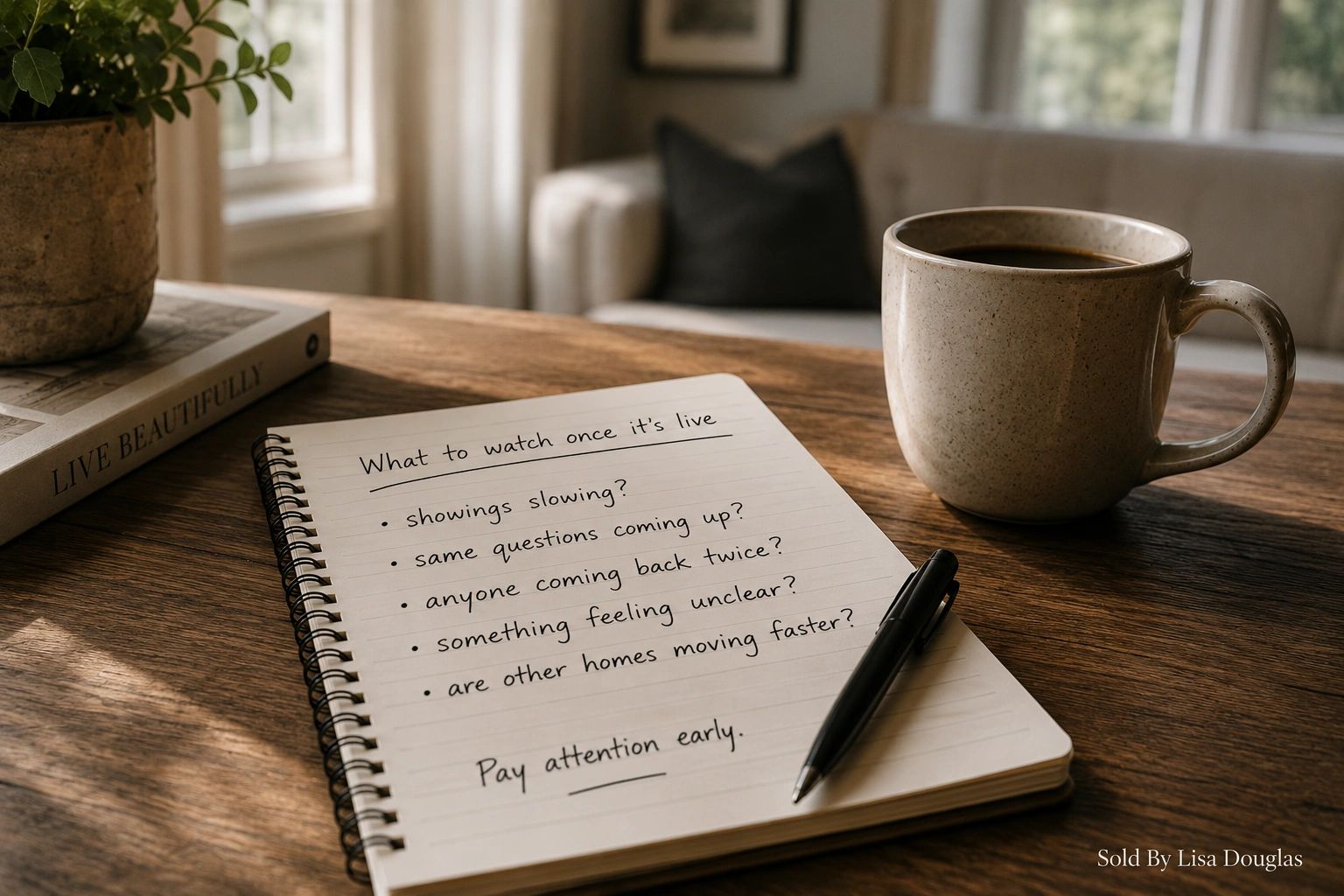
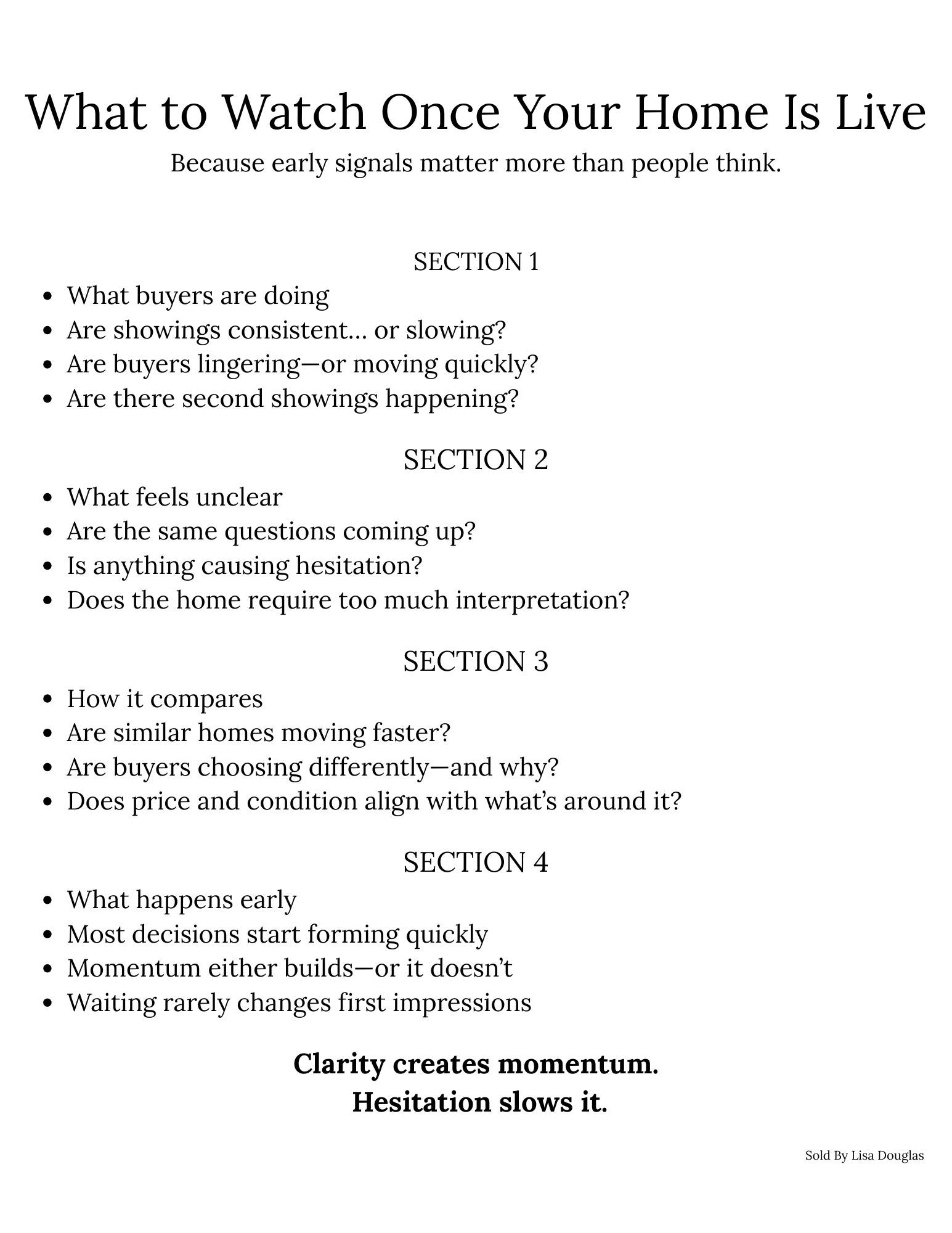
Here’s A simple way to track what matters once your home is live:
Why Waiting Feels Easier—But Costs More
It’s natural to want more time.
More exposure.
More feedback.
More certainty.
But time doesn’t always solve misalignment.
Sometimes it reinforces it.
And the longer that gap exists,
the more visible it becomes.
What Early Alignment Actually Does
When expectations and market response are aligned early:
- decisions become easier
- momentum builds instead of stalls
- and the process feels more controlled
Not because everything is perfect.
But because it’s understood.
If You’re in This Moment
This is usually the point where things start to feel unclear.
Not drastically.
Just enough to question what to do next.
The conversation most sellers avoid isn’t about price.
It’s about alignment.
And having it earlier doesn’t create pressure—
It creates clarity.
