
 Facebook
 X
X
 Pinterest
 Copy Link
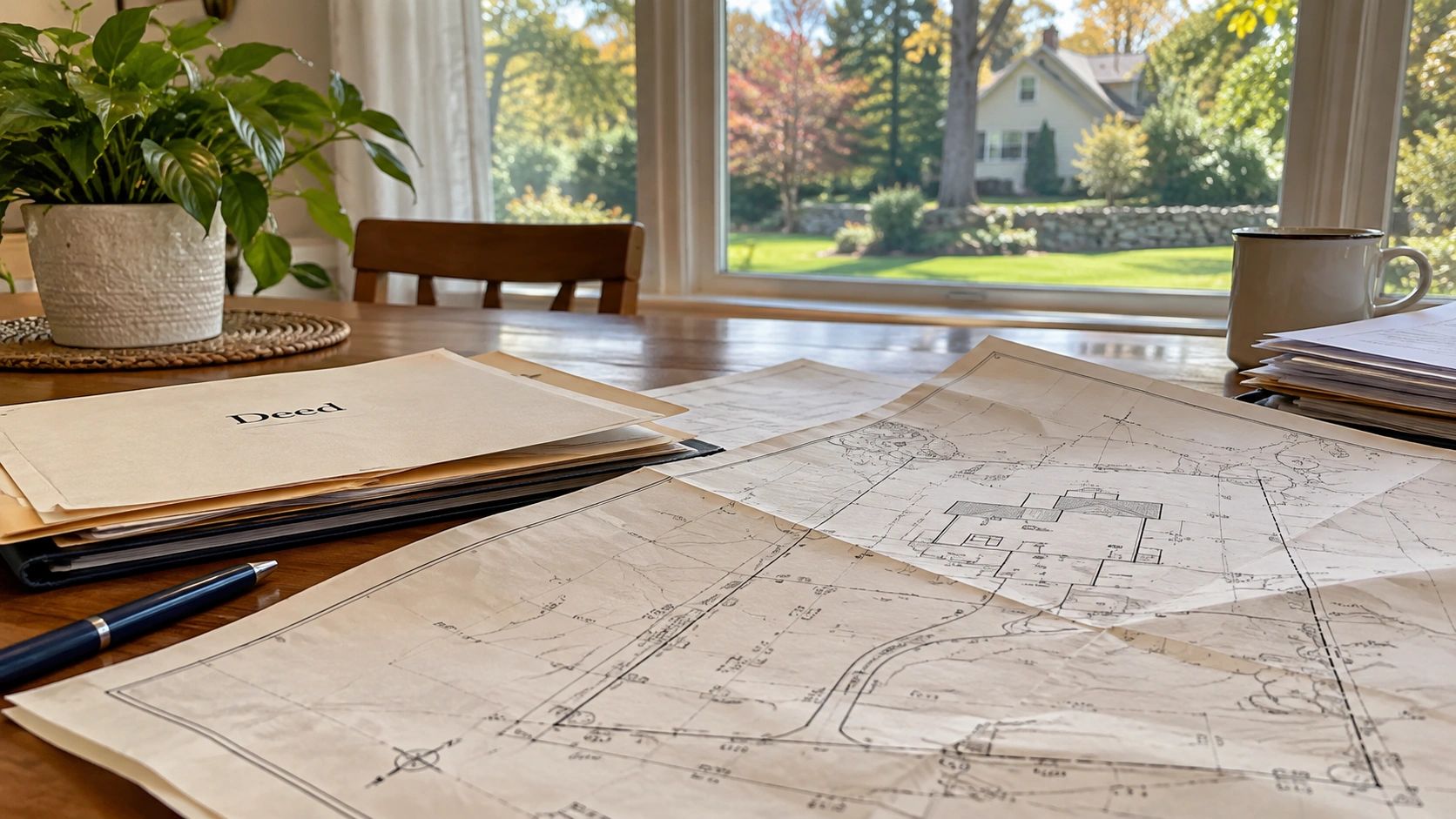
When I meet with a homeowner who is thinking about selling, one of the first things I want to understand is what paperwork exists.
Because somewhere in a drawer, filing cabinet, basement box or old closing folder may be documents that answer questions before a buyer, attorney, lender or title company ever has to ask them.
And one of the most important is the survey.
Find Your Survey
If you have a survey from when you purchased the home, refinanced, added a pool, built an addition or made another major improvement, find it.
Please do not assume it is unimportant because it is old.
I usually want a copy for my file — and if the original is all you have, I will often take a photo of it when we meet.
Your attorney will ask for it.
The buyer’s attorney and title company will also review the survey to understand the property boundaries and look for things like encroachments and easements. A lending bank may require a new survey if the existing one is dated.
A survey can reveal things that are easy to miss when you simply walk the property:
- a fence that crosses a property line
- a driveway that clips a neighboring parcel
- a shed, garage or pool that sits differently than expected
- an easement running through the property
That does not automatically mean there is a problem.
It means the survey gives us information.
And information is much easier to deal with before we bring your home to market.
Check the Deed Too
If your name has changed since you purchased the property — because of marriage, divorce, a trust, an estate or another life change — let your attorney know early.
The deed shows how ownership is recorded, and title work is used to confirm ownership and identify issues that may need to be resolved before closing.
That does not automatically mean there is a problem.
It simply means that if the name on the deed and the name you use today are different, it is better to understand what documentation may be needed well before closing.
Then Find the Rest of the Property Records
The survey and deed are important, but they are only part of the picture.
I also want to know whether you have:
- certificates of occupancy for additions, finished spaces, pools, sheds, generators or other permitted improvements
- septic and well records, if applicable
- warranties for major systems or recent replacements — especially the roof
- any easement or right-of-way documents you already have
The age of the roof is important to buyers, inspectors, appraisers and insurers, so if you have a roof warranty or documentation showing when it was replaced, that is worth finding.
Roof condition can affect value, marketability, insurability and even lending requirements, so this is one of those details worth knowing early.
You do not need to have every piece of paper perfectly organized.
You just need to start looking.
Why These Records Matter
Most homeowners know their house incredibly well.
They know when the roof was replaced.
They remember when the pool went in.
They know which part of the basement was finished and which addition came later.
But the next person looking at the property does not have that history.
The buyer, attorney, title company, lender and appraiser are looking at the home through both the property itself and the records that support it.
That is why something that feels completely obvious to you may still need to be documented.
What If You Cannot Find Everything?
That is normal too.
Sometimes we have everything.
Sometimes we have half of it.
Sometimes there is an old survey folded into a drawer that nobody has looked at in twenty years.
And sometimes we need to go find the records somewhere else.
Sometimes the missing piece is easy to find.
Sometimes it takes a little more digging.
The goal is not to show up with a perfect binder.
The goal is to understand what exists, what is missing and what may still need to be found.
Preparation Is More Than Presentation
Preparing a home for sale is about more than presentation.
It is also about making sure we understand the property itself.
The survey, the deed, the certificates of occupancy, the well and septic records, the roof information — they all help tell the story of the home we are bringing to market.
And the earlier we understand that story, the easier it is to deal with questions calmly instead of scrambling for answers later.
Good preparation is not about creating problems. It is about removing surprises.
